
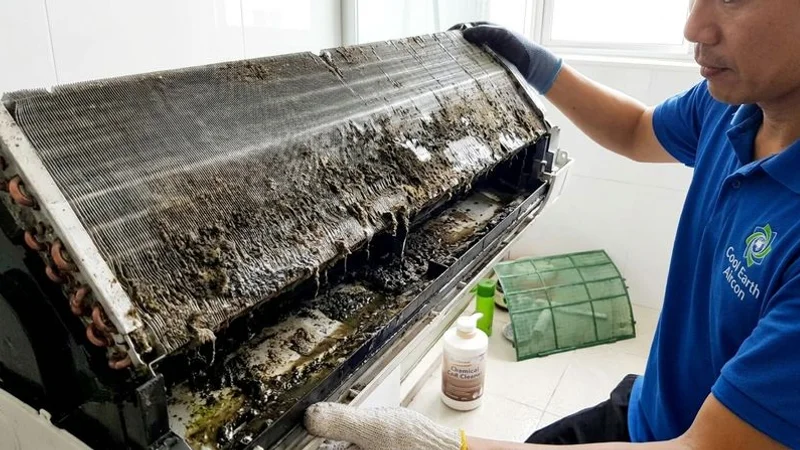
We often see homeowners in Tampines puzzled when their regularly serviced cooling system suddenly stops performing. You might be researching the 5 signs your aircon needs a chemical wash after setting the thermostat to 18°C and only feeling a weak, lukewarm breeze through the vents.
Our team at Cool Earth Aircon Tampines has spent years diagnosing these exact symptoms across HDB flats in Tampines East, Tampines West, and the newer BTO developments in Tampines North. That invisible dividing line between a quick fix and a serious problem usually points to one solution.
A deep chemical treatment is often the only way to restore proper function.
What We Will Cover
- The hidden data behind cooling performance drops in high-humidity environments.
- Practical ways to respond to each specific symptom.
We will walk through the definitive warning signs that indicate your unit needs this intervention. Let us look at the facts and help you make an informed decision.
1. Weak or Warm Airflow
Our technicians find this to be the most common symptom, and it is usually the first one homeowners notice. Your compressor is running, but the air coming out of the vents feels weak or simply is not cold.
Over time, dust and grime coat the evaporator coils. These coils are responsible for absorbing heat from the air inside your room. Our inspections frequently reveal that a dust layer as thin as 0.042 inches reduces cooling efficiency by up to 21 percent. This effectively downgrades a premium 5-tick National Environment Agency (NEA) rated unit to a 2-tick performance level.
To compensate, you might lower the temperature to 16°C. We strongly advise against this practice, as it just burns electricity. Standard servicing usually only cleans the accessible front face of the coils. Our chemical wash protocol involves dismantling the unit to access the back of the evaporator coil. The alkaline solution dissolves deep-seated grime that normal brushing misses.
Airflow Diagnosis Checklist
- Weak and warm air: Dirty coils are the likely culprit, requiring a chemical wash.
- Normal airflow but not cold: This often points to a refrigerant leak.
- Completely dead airflow: The blower motor might have failed entirely.
Our diagnostic process helps distinguish dirty coils from other issues. A targeted approach saves you from paying for unnecessary repairs.
2. Persistent Musty or Foul Odour
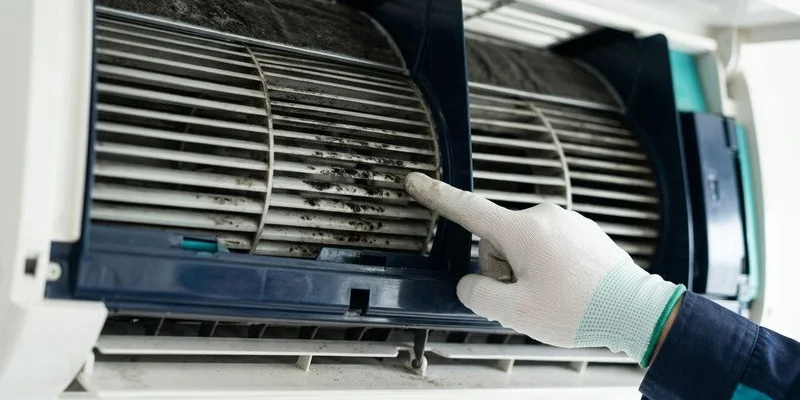
We often hear clients in Tampines complain about an “old sock” smell when they switch on their unit. A musty or sour odour is a definitive sign that mould and bacteria have colonised the damp interior.
Singapore’s humidity levels regularly sit above 80 percent, and Tampines is no exception. The tropical climate here, with temperatures of 31 to 33°C and relative humidity reaching 90 percent during the monsoon months, creates a perfect breeding ground for microbial growth. Condensation on the evaporator coils and blower wheel turns dust into a thick, biological slime.
Standard wiping or vacuuming cannot eliminate this issue. We use alkaline cleaning solutions to kill the mould at its root. The World Health Organization (WHO) indoor air quality guidelines explicitly link indoor dampness to respiratory risks. We urge you to take these health warnings seriously.
Health Symptoms Linked to Aircon Mould
- Unexplained sneezing or coughing fits indoors.
- Watery, itchy eyes that improve when you leave the house.
- Aggravated asthma or chronic sinus infections.
Young children and elderly family members face the highest risks from circulating mould spores. Our team has seen chronic respiratory issues vanish after a proper sanitisation. Taking prompt action protects both your equipment and your family.
3. Water Leaking from the Indoor Unit
We respond to emergency calls for leaking units almost every single week across Tampines. Water dripping down your newly painted wall or onto expensive flooring is incredibly frustrating and damaging.
A blocked condensate drain is the usual suspect, choked by a jelly-like algae formed by dust and moisture. Our technicians frequently clear these blockages with a simple vacuum flush. That said, persistent or recurring leaks indicate a much deeper contamination issue.
In older HDB blocks across Tampines East and Tampines West, we find that high indoor humidity accelerates jelly formation in drainage pipes. Algae quickly grows back inside the drain pan if the root cause is ignored. Sometimes, severely fouled evaporator coils prevent condensation from flowing smoothly. Water drips off dirty coil fins at odd angles, misses the drainage tray completely, and ruins your plaster.
We treat the drain pan and coils with a specialised antimicrobial solution during a chemical wash. This treatment destroys the algae and restores the original surface tension.
Regular Flushing vs. Chemical Wash
| Service Type | Average 2026 Cost (Single Unit) | Effect on Algae & Leaks |
|---|---|---|
| Standard Servicing | S$25 - S$45 | Temporarily clears blockages, algae returns in weeks. |
| Chemical Wash | S$80 - S$120 | Kills algae at the root, prevents recurring leaks. |
Our goal is to provide a long-term fix rather than a temporary bandage. If your unit still leaks after treatment, you might have a cracked drain pan. We will inspect the mechanical integrity of your system to rule out structural failures.
4. The Unit Takes Much Longer to Cool the Room
We regularly meet clients in Tampines who have slowly adapted to their declining cooling performance. You used to set the remote to 24°C and feel comfortable within 15 minutes, but now it takes almost an hour.
This gradual decline is a textbook sign of severe dirt accumulation acting as an insulating layer. Thicker layers of grime drastically reduce the rate of heat transfer. The longer the compressor runs to reach the target temperature, the more electricity it consumes. We want you to understand the real financial impact of ignoring this invisible problem.
Based on recent SP Group tariffs averaging around 32.57 cents per kWh, a standard 12,000 BTU unit costs roughly 30 to 35 cents per hour to run. A heavily fouled unit increases compressor energy consumption by up to 40 percent.
“A dirty aircon forced to run continuously can add S$30 to S$40 to your monthly utility bill for a single room, turning a neglected maintenance task into a recurring financial penalty.”
A single dirty unit quietly drains your wallet every single night. We consider a chemical wash a direct investment in energy efficiency. A one-time procedure pays for itself within three to four months through lower bills. Most homeowners only notice the problem when they experience a truly clean system elsewhere.
5. Unusual Noises from the Indoor Unit
We know that a sudden rattling, buzzing, or rhythmic thumping sound causes immediate concern. If your cooling system has started making unfamiliar noises, the blower wheel is likely unbalanced.
This cylindrical component, often called the squirrel-cage fan, spins at high speeds to push cold air into the room. Our technicians frequently find a thick, felt-like layer of dust and mould accumulated unevenly on the blower fins. This uneven weight distribution creates intense vibrations that manifest as frustrating mechanical sounds.
We use high-pressure chemical jets to thoroughly strip this heavy debris from the delicate plastic fins. Ignoring an unbalanced blower wheel causes severe strain and premature wear on the internal motor bearings. Our repair records show that replacing a burnt-out fan motor is incredibly expensive.
Decoding Aircon Noises
- Rhythmic thumping or rattling: Indicates a dirty, unbalanced blower wheel.
- Continuous high-pitched squeal: Points to a failing fan motor bearing requiring replacement.
- Soft clicking at startup: This is normal expansion of the plastic casing.
These auditory clues help technicians diagnose the exact point of failure. We train our staff to distinguish between dirt-induced vibrations and genuine mechanical damage. A proper inspection saves your equipment from catastrophic breakdowns.
Do Not Wait for All 5 Signs
We strongly advise against waiting until you see all 5 signs your aircon needs a chemical wash before taking action. Even a single persistent warning sign is reason enough to schedule a deep clean. Our experience confirms that early intervention drastically reduces the severity of the biological buildup.
Ideal Chemical Wash Frequencies
- Standard Usage: Once a year for systems on regular maintenance schedules.
- Heavy Usage: Twice a year for units operating more than 12 hours daily.
In Tampines, where most households run their aircon systems around the clock to combat the tropical heat, we recommend leaning towards the heavier schedule. The sooner you act, the more effective and affordable the cleaning process will be. We will assess your unit’s condition and provide transparent pricing before any work begins.
If you are noticing any of these signs, contact Cool Earth Aircon to book a chemical wash today. For more details on the exact procedures involved, read our comprehensive guide on what happens during a chemical wash.
About the Author
Mr. Hou
Tampines Division Lead
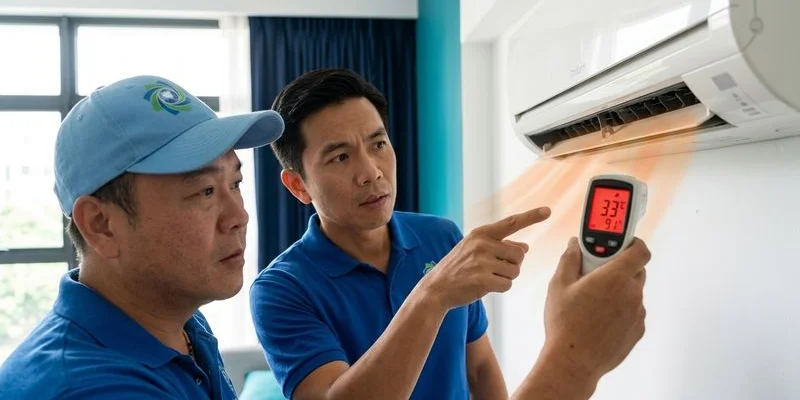
Mr. Hou leads the Cool Earth Aircon Tampines division with over 15 years of hands-on experience servicing aircon systems across Tampines, Simei, and Pasir Ris. He specialises in complex diagnostics and chemical overhauls for HDB and commercial properties.