
Aircon Gas Top Up Tampines - R22 & R410A Refill
Aircon gas top up in Tampines from S$50. R410A, R32, and R22 refrigerants. Same-day leak detection and pressure testing by local technicians. Call +65 9427 3833.
How Refrigerant Keeps Your Aircon Cold
Your aircon system relies on refrigerant gas to absorb heat from indoor air and release it outside. This gas circulates through a sealed loop of copper piping between the indoor evaporator coil and the outdoor condenser. When refrigerant levels drop below the correct amount, the system cannot transfer heat effectively, resulting in poor cooling performance or no cooling at all. In Tampines, where daytime temperatures consistently sit between 31 and 33 degrees and humidity pushes past 85%, even a small drop in refrigerant charge makes a noticeable difference to your comfort.
A gas top-up is one of the most common aircon servicing requests we receive from local residents, and for good reason. Low refrigerant is among the top causes of aircon units that stop blowing cold air. However, it is important to understand that a gas top-up treats the symptom, not necessarily the cause. If your system is losing gas, there is usually a leak that needs attention first.
Signs Your Aircon Is Low on Refrigerant
Whether you live in an HDB flat near the Central hub, a condo close to Simei MRT, or a landed property in the East Region, these are the symptoms that indicate your refrigerant levels may be low.
Reduced Cooling Power
The most obvious sign. Your aircon runs but the air coming out is not as cold as it should be. You might find yourself setting the temperature lower and lower, yet the room never feels comfortable. A properly charged system should produce supply air at 14 to 18 degrees Celsius. During a typical afternoon when outdoor temperatures hit 33 degrees, the difference between a fully charged and undercharged system is immediately noticeable.
Ice Formation on Pipes
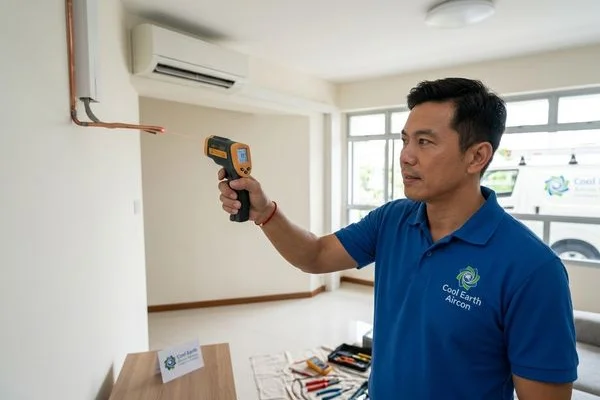
When refrigerant is low, the evaporator coil gets excessively cold in localised areas, causing moisture to freeze on the coil surface and the connecting pipes. If you see ice or frost on the copper piping coming out of your indoor unit, low gas is a very likely cause. This is particularly common during the wetter Northeast Monsoon months from November to March, when the East Region experiences its heaviest rainfall and ambient humidity regularly hits 90% or above.
Constant Running Without Reaching Set Temperature
The compressor runs continuously because the system cannot achieve the thermostat set point. This not only fails to cool your home but also drives up electricity consumption and puts unnecessary strain on the compressor. For households running 3 or 4 units across a typical HDB flat, the additional electricity cost from a single undercharged system adds up quickly.
Unusual Sounds from the Outdoor Unit
A low-charge system can produce hissing or bubbling sounds at the outdoor unit. The compressor may also sound laboured or cycle on and off erratically. If your condenser sits on an HDB aircon ledge where sound carries easily between floors, neighbours may notice before you do.
Our Gas Top-Up Process
Our gas top-up procedure at Cool Earth Aircon Tampines is systematic and thorough. We do not simply connect a cylinder and start filling. That approach leads to incorrect charging and potential compressor damage.
Pressure Measurement
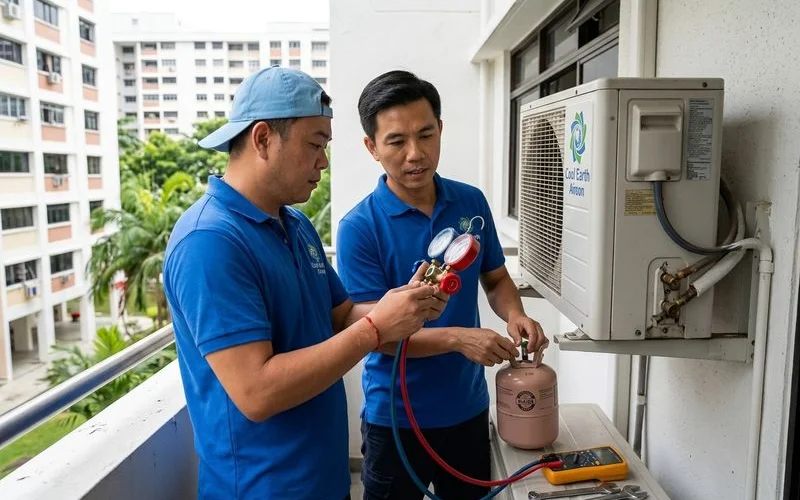
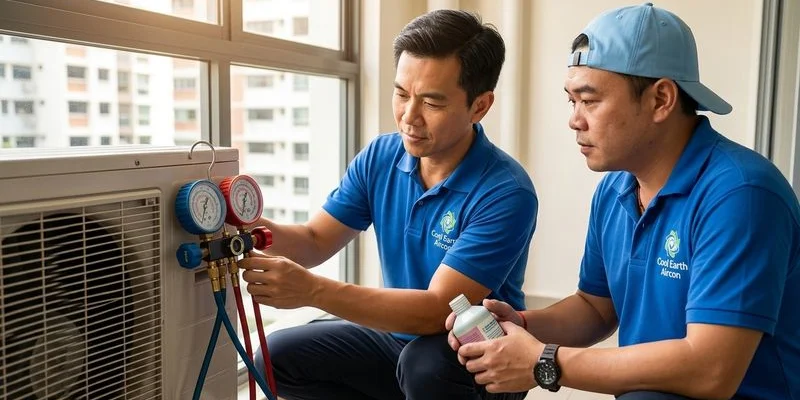
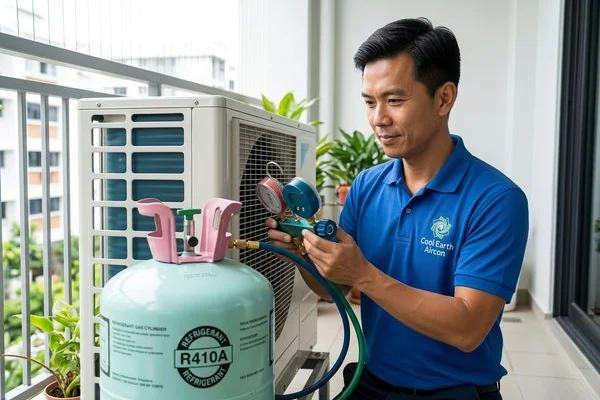
The first step is connecting our calibrated manifold gauge set to the service valves on your outdoor unit. We measure both the high-pressure (discharge) and low-pressure (suction) sides and compare readings against the manufacturer’s specifications for your specific model. These readings tell us exactly how much refrigerant the system currently holds and how much needs to be added.
Leak Detection
If the gas level is significantly below specification, we inspect for leaks before topping up. Common leak points include:
- Flare joints - where copper pipes connect to the indoor and outdoor units. In the East Region, humid coastal air causes oxidation at these connections, weakening seals over time
- Welded joints - solder joints along the piping run, particularly where piping passes through trunking that traps moisture
- Evaporator coil - especially in older units where corrosion weakens the coil surface
- Service valves - at the outdoor unit connection points
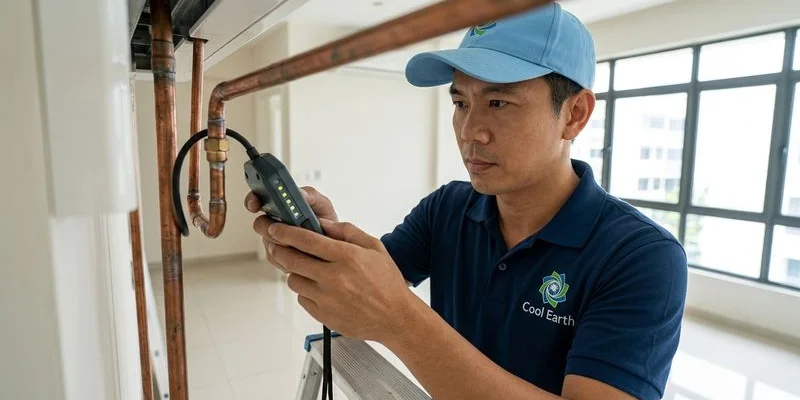
Finding and repairing a leak before topping up ensures you are not wasting money on gas that will simply escape again. We use soap-bubble testing and electronic leak detectors to locate the source.
Precise Charging
We add refrigerant slowly and in controlled quantities, monitoring the gauge readings throughout the process. The goal is to reach the exact specified charge, not more, not less. Overcharging causes high head pressure, reduces efficiency, and can permanently damage the compressor. Undercharging means you will be back to the same problem within weeks. For brands like Daikin, Mitsubishi, and Panasonic, we follow the manufacturer’s exact charging specifications.
Performance Verification
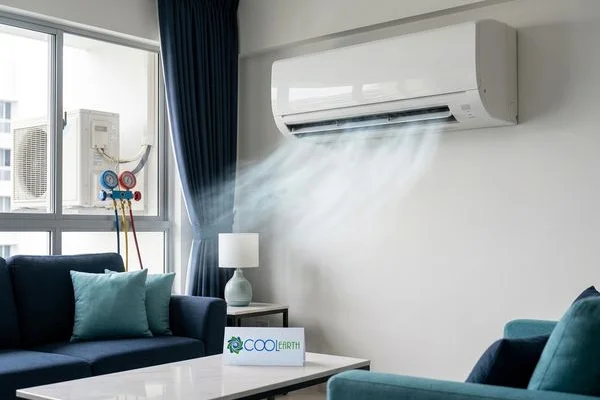
After charging, we measure the supply air temperature from the indoor unit and compare it against expected values. We also check the temperature differential between return air and supply air. A healthy system should produce a differential of 8 to 12 degrees Celsius.
R410A vs R32 vs R22: Which Gas Does Your Unit Use?
Different aircon systems use different refrigerants. Using the wrong type causes serious damage.
R410A
The most common refrigerant in modern systems manufactured after approximately 2010. R410A operates at higher pressure than R22 and requires equipment rated for these pressures. It does not deplete the ozone layer and is the current industry standard in Singapore. Most newer HDB flats and BTO developments in Tampines use R410A systems.
R32
A newer refrigerant with lower global warming potential than R410A. Increasingly used in premium systems from Daikin, Panasonic, and Mitsubishi. R32 offers slightly better energy efficiency but requires trained handling as it is mildly flammable. We are seeing more R32 units in the newer condo developments across the East Region.
R22 (Being Phased Out)
Used in older systems manufactured before 2010. R22 is an ozone-depleting substance being phased out globally under the Montreal Protocol. As of 2026, supply is limited and prices have increased significantly. Many older HDB flats in the East and West subzones still run R22 systems that were installed when these estates were first built. If your system uses R22, consider upgrading to a modern R410A or R32 system rather than continuing to invest in increasingly expensive top-ups. Read our detailed comparison of R22 vs R410A aircon gas to understand the key differences.
When Topping Up Is Not the Right Fix
We believe in giving honest advice, even when it means recommending something other than what you initially called us for. In some cases, a gas top-up is not the right solution:
- Recurring low gas - If you have topped up within the past 6 months and the gas is low again, you have a leak that needs repair. Repeated top-ups are throwing money away.
- Dirty evaporator or fan coil - Poor cooling is not always a gas issue. A clogged fan coil can mimic low-gas symptoms. This is common in homes here where high humidity accelerates grime buildup. In these cases, an aircon chemical wash or full chemical overhaul is the proper fix.
- Very old systems on R22 - The cost of R22 gas plus repeated top-ups may exceed the value of upgrading to a new system with better efficiency and a manufacturer warranty. The area has many R22 units from the 1990s and early 2000s that fall into this category.
- Compressor issues - If the compressor is struggling or making grinding noises, adding gas will not fix the underlying mechanical problem. We will advise you honestly after a full diagnosis.
How Cool Earth Compares
| Feature | Typical Provider | Cool Earth Aircon |
|---|---|---|
| Leak check before top-up | Sometimes skipped | Always included |
| Calibrated gauges | Not guaranteed | Calibrated manifold gauge set |
| Warranty | Varies | 90-day workmanship warranty |
| Response time | 2-3 days | Same-day for local residents |
| R22, R410A, R32 on vehicle | Limited stock | All three carried on every visit |
Get a Same-Day Diagnosis
Aircon not blowing cold? WhatsApp Cool Earth Aircon at +65 9427 3833 for a quick diagnosis. Our technician can often narrow down the likely cause over chat and schedule a same-day visit. Mr. Hou’s team serves the Central hub, East and West subzones, Simei, and all surrounding neighbourhoods. Every gas top-up comes with our 90-day workmanship warranty, and we carry R410A, R32, and R22 refrigerant on our service vehicles for immediate charging.
What's Included
Every service is thorough, transparent, and backed by our warranty.
Accurate pressure measurement with calibrated gauges
R410A, R32, and R22 refrigerants available
Leak detection before top-up
Correct charging to manufacturer specifications
Temperature differential testing
System performance verification
Honest advice on leak repairs vs top-up
90-day workmanship warranty
How It Works
Our straightforward process from booking to completion.
Pressure Check
We connect professional gauges to your outdoor unit and measure the current refrigerant pressure against manufacturer specifications.
Leak Assessment
If gas is significantly low, we inspect for visible leaks at joints, connections, and the evaporator coil. Recurring low gas usually indicates a leak.
Gas Charging
Refrigerant is carefully added to reach the correct pressure. We use precise measurements - overcharging is just as harmful as undercharging.
Performance Test
We measure the supply air temperature and compare it against expected values. Your aircon should be blowing cold air at 14-18°C.
Our Work
Why Choose Cool Earth Aircon Tampines
Honest Diagnosis
We do not just top up gas and leave. If your system is leaking, we tell you upfront and explain the repair options. A top-up on a leaking system is wasted money.
Correct Refrigerant
Using the wrong refrigerant type damages your compressor. We always verify and use the exact refrigerant specified for your system, whether it is R410A, R32, or R22.
Fast Local Response
Our Tampines team carries R410A, R32, and R22 on every service vehicle. Because we are based nearby, we can often provide same-day gas top-ups for Tampines residents.
What Our Customers Say
"Our master bedroom aircon in our Tampines West HDB was barely cooling despite clean filters. Mr. Hou's technician found the gas pressure was well below spec and also spotted a small leak at the flare joint behind the trunking. He repaired the leak and topped up the R410A. Cooling is back to full strength and it has held steady for three months now."
— Ahmad R.
"Called Cool Earth on a Saturday morning because our living room unit was blowing warm air. Being in Tampines, I expected a long wait, but the technician arrived within 90 minutes. Checked the gas pressure, topped up the R32, and tested the output temperature before leaving. Very transparent about what was done and why. Fair pricing too."
— Jenny T.
Frequently Asked Questions
How do I know if my aircon needs a gas top-up?
Why does my aircon keep losing gas?
What is the difference between R410A and R22?
How often does aircon gas need to be topped up?
Can I top up the gas myself?
Related Services
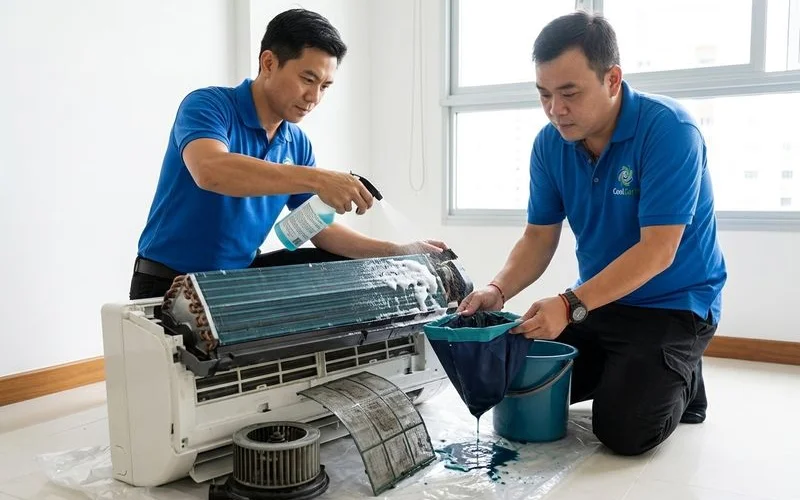
Chemical Wash
Deep chemical wash and overhaul for aircon units in Tampines from S$80. Restores cooling efficiency, eliminates mould and odours caused by East Singapore's extreme humidity.
From S$80
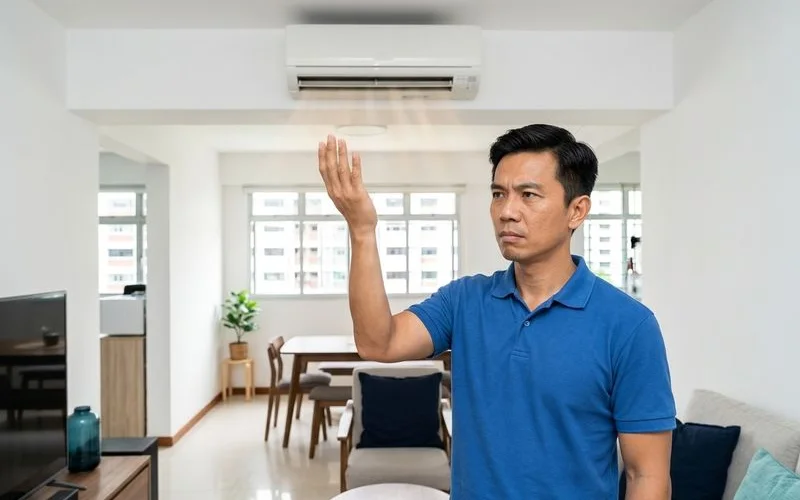
Not Cold
Aircon not blowing cold air in Tampines? Our local technicians diagnose and fix the problem fast. From S$40 troubleshooting fee. Common causes include low gas, dirty coils, and faulty components.
From S$40
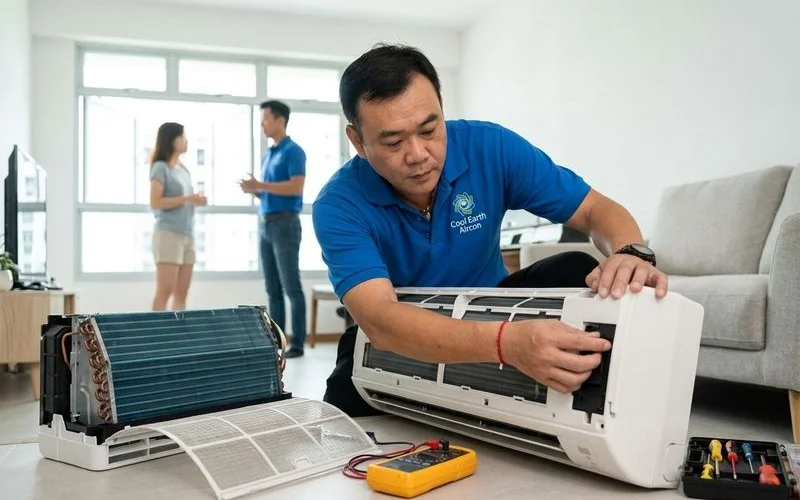
Servicing & Maintenance
Professional aircon servicing in Tampines from S$50 per unit. Regular maintenance keeps your aircon running efficiently in Singapore's tropical humidity. Same-day availability for Tampines residents.
From S$50
Ready to Book Your Gas Top-Up Service?
Get in touch today for fast, professional aircon service with transparent pricing and our 90-day workmanship warranty.